Saving Eden: One fragment at a time
“The past has been there all along, reminding us: This time -- maybe, hopefully, against all odds, we will get it right.”
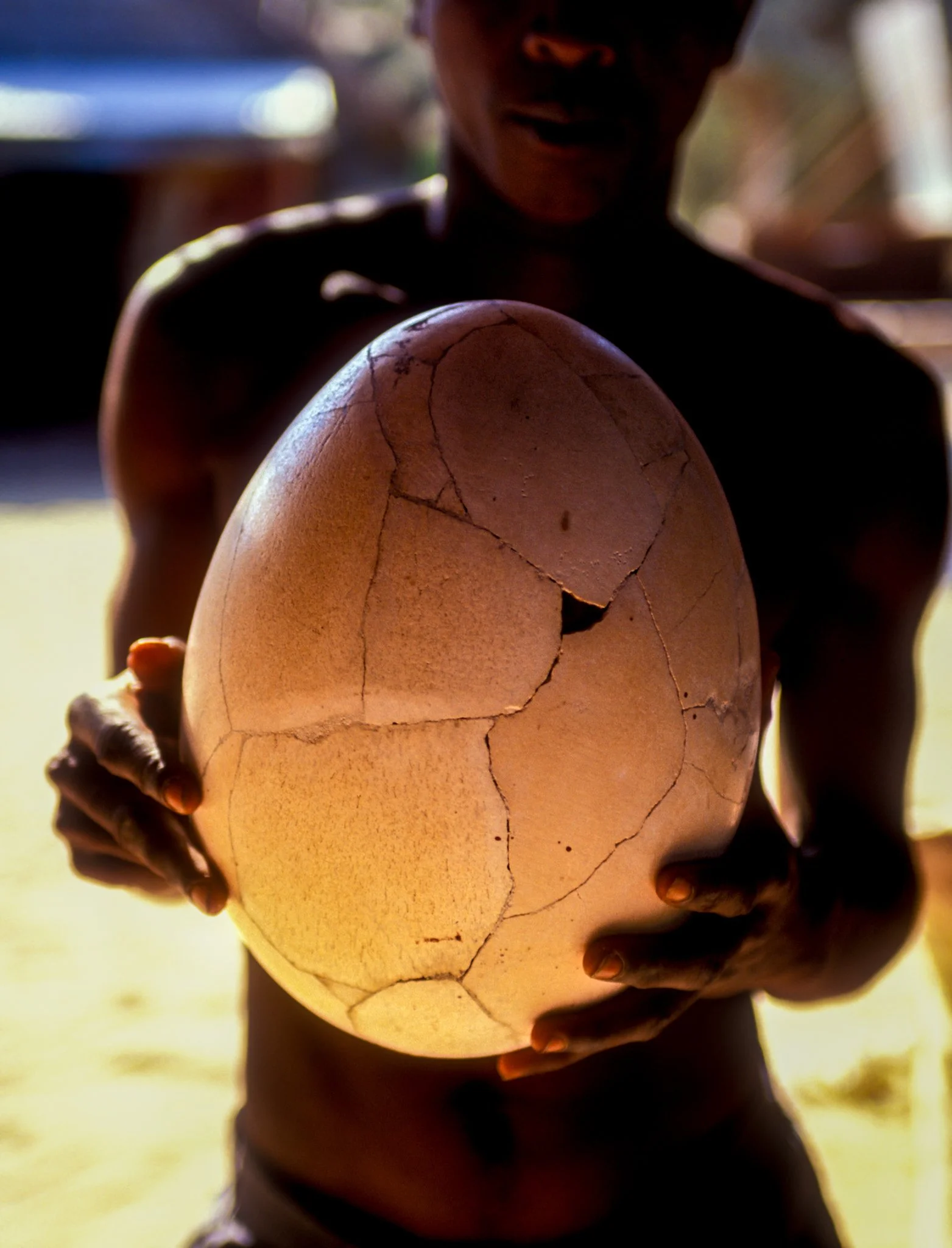
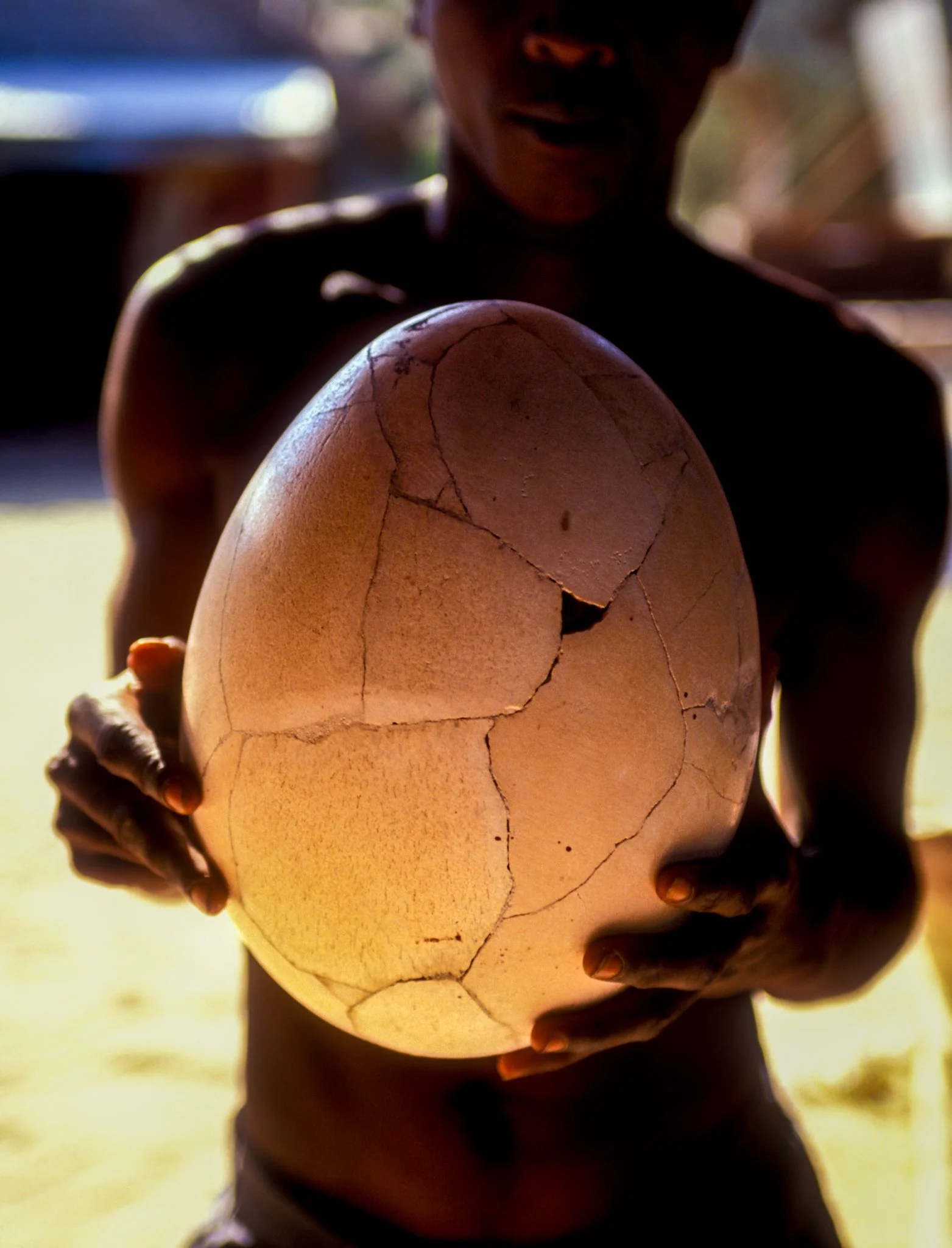
When humans arrived on the island we know today as Madagascar, they encountered amazing wildlife likely never seen before: pygmy hippos, man-sized lemurs, giant tortoises and - the progenitors from and the creatures responsible for this egg - elephant birds.
Compelling archaeological evidence suggests humans settled the island some 11,000 years ago. In this time, and for thousands of years after, they lived with and subsisted from these birds (and other animals).
Research shows that at around 1,000 years ago, the human population expanded rapidly, and permanent settlement, land clearance and large-scale agriculture and farming took hold.
And it is at this time, it is believed, that the extinctions began to wipe out these amazing creatures.
Today, Madagascar is world-famous for it's unique biome; still an incredible "mega-diverse hotspot". Biodiversity protection on the island is being managed through combinations of international scientific funding alongside with community-led stewardship.
Efforts include creating and expanding protected areas, restoring crucial ecosystems, and promoting climate-smart agriculture to alleviate poverty, which is a primary driver of biodiversity loss.
Indigenous and local communities are critical to this process, being recruited and trained as active managers of conservation initiatives, making best use of their unique local knowledge of the environment.
It was a joy and honour to meet this proud member of a local indigenous community who showed off this rare, almost completely restored elephant bird egg to me when I stayed at his family-led eco lodge in southern Madagascar many years ago.
"It is easy, among all the other crises in the world, to forget about Madagascar. But forgetting would mean the death of millions of people, the precious biodiversity in Madagascar, the cultural and linguistic resources of the island, and the humanity and dignity of all those who live there. Do not forget about Madagascar."